
WHAT IS RENNET? THE SCIENCE BEHIND CHEESE FORMULATION
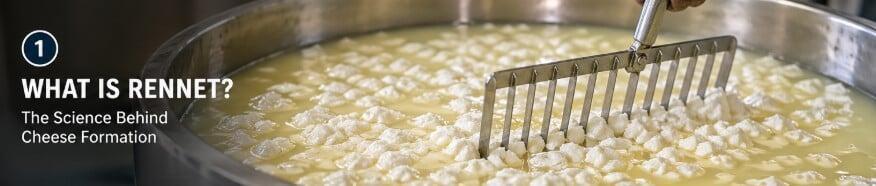
Rennet is one of the most essential ingredients in cheese-making, yet it is often misunderstood. At its core, rennet is a coagulant — an enzyme that transforms milk from a liquid into a solid curd, forming the foundation of all cheese varieties.
How Rennet Works
Milk contains proteins called casein, which are naturally suspended in liquid. When rennet is added, it triggers coagulation by breaking down these proteins, allowing them to bind together and form curds while separating whey.
This process is critical because:
- It determines texture
- Influences yield
- Affects final cheese quality
Without effective coagulation, consistent cheese production is nearly impossible.
Types of Rennet
Modern cheese-making uses several types of rennet:
- Animal Rennet – Traditional, derived from calf stomachs
- Microbial Rennet – Produced via fermentation
- Fermentation-Produced Chymosin (FPC) – Highly consistent, modern solution
Today, most industrial producers prefer fermentation-based options due to consistency, scalability, and dietary compatibility.
Why Consistency Matters
In commercial production, even small variations in coagulation can lead to:
- Yield losses
- Texture defects
- Batch inconsistencies
That’s why high-quality coagulants are essential for reliable results across varying milk conditions.
Key Takeaway
Rennet is not just an ingredient — it is the control point that determines how successfully milk becomes cheese.