
BEYOND THE CHEESE BOARD - THE VERSATILITY OF FONTINA
https://dynamikoingredients.zohocommerce.com/products/c22e35334d/4122928000012445005
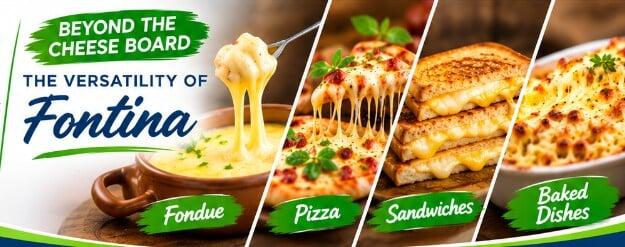
A great cheese is defined not only by its flavour but also by its versatility and performance in different food applications. Fontina is an excellent example of a cheese that combines both. Its creamy, buttery flavour, smooth texture and excellent melting properties make it suitable for everything from traditional Italian dishes to modern food innovation. Whether served on a cheese board, melted into a rich sauce or incorporated into a gourmet sandwich, Fontina offers cheesemakers, chefs and food manufacturers numerous possibilities.
Let's explore how this versatile cheese can be used across different food applications.
1. Why does Fontina melt so well?
One of Fontina's most desirable characteristics is its ability to melt into a smooth, creamy consistency.
Cheese melting behaviour is influenced by several factors:
Moisture content: Water helps influence how easily the cheese softens and flows when heated.
Fat content: Milk fat contributes to creaminess, richness and mouthfeel.
Protein structure: The casein protein network determines how the cheese softens and stretches.
Acidity (pH): The level of acidity influences the mineral balance and structure of the cheese.
Maturation: Biochemical changes during maturation influence the cheese's texture and melting behaviour.
The balance between these factors determines how a cheese performs during heating.
This makes Fontina-style cheese particularly attractive for applications where smooth melting, creamy texture and good flavour are desirable.
2. Traditional Italian applications
- Fonduta Valdostana: One of the best-known applications is Italian Fontina fondue. Cheese is gently heated with milk and other ingredients to create a rich, creamy preparation. It is traditionally served with bread and can accompany vegetables and other savoury dishes.
- Seupa à la Vapelenentse: A traditional regional dish prepared using layers of bread and cheese, combined with broth and baked until rich and flavourful.
- Polenta with Fontina: Fontina can be incorporated into warm polenta, adding richness, creaminess and a distinctive cheese flavour.
3. Fontina in modern food applications
- Pizza: Adds creamy flavour and melting characteristics to gourmet pizza toppings.
- Sandwiches: Suitable for toasted sandwiches, paninis and premium deli products.
- Pasta and sauces: Can be incorporated into creamy cheese sauces, pasta fillings and baked dishes.
- Burgers: Provides a rich, creamy cheese topping for gourmet burgers.
- Stuffed products: Can be used in savoury fillings for chicken, meat and bakery products.
- Cheese platters: Suitable for slicing, cubing and serving with crackers, fruit and accompaniments.
4. Opportunities for food manufacturers
The versatility of Fontina-style cheese creates opportunities beyond traditional cheese retail.
Food manufacturers can explore its use in:
Product category | Potential application |
|---|---|
Dairy products | Speciality cheese varieties |
Food service | Cheese sauces and fondue preparations |
Bakery | Savoury pastries and cheese fillings |
Ready meals | Pasta bakes, gratins and prepared meals |
Meat products | Cheese-filled meat products and burgers |
Frozen foods | Pizza toppings and prepared meals |
Retail | Sliced, grated and portioned speciality cheese |
For commercial production, the finished cheese should be tested for melting behaviour, flavour stability, moisture, texture and performance under the intended processing conditions.
5. Pairing Fontina with other ingredients
Fontina's mild, buttery flavour makes it compatible with many ingredients.
Some popular combinations include:
Herbs: Rosemary, thyme and basil.
Vegetables: Mushrooms, spinach, potatoes and roasted peppers.
Meats: Ham, chicken, bacon and selected cured meats.
Breads: Sourdough, ciabatta and artisan bread.
Other cheeses: Parmesan, Gruyère and mozzarella.
Additional flavours: Garlic, black pepper and truffle.
These combinations offer opportunities to develop distinctive recipes and premium food products.
6. Developing speciality cheese products
For cheesemakers and food manufacturers, developing a speciality cheese involves more than simply selecting a flavour.
Important considerations include:
Milk composition and quality.
Selection of suitable starter and adjunct cultures.
Fermentation and acidification control.
Coagulation and curd handling.
Moisture and salt management.
Maturation conditions.
Final product texture and melting performance.
A well-controlled manufacturing process helps ensure that the finished cheese meets the desired quality and application requirements.
Conclusion
Fontina demonstrates how a traditional speciality cheese can offer exciting possibilities in modern food manufacturing.
From authentic Italian recipes to gourmet burgers, pizza, sauces and ready meals, its creamy flavour and melting characteristics make it an appealing choice for a wide range of culinary applications.
For food manufacturers looking to explore speciality cheese production, understanding the characteristics of Fontina-style cheese is an excellent starting point.